Hypoallergenic Guard Dogs - Hypoallergenic Guard Dog Breeds for Allergy Sufferers
What are the best hypoallergenic guard/watchdog breeds? Here is hypoallergenic guard dog breeds list for protection of your house and family:

Australian Cattle Dog

Samoyed

Scottish Terrier

Alaskan Malamute

Bull Terrier

Whippet

German Wirehaired Pointer

Dalmatian

Shar-Pei

Wirehaired Pointing Griffon

Great Pyrenees

Dogue de Bordeaux

Cardigan Welsh Corgi

Cairn Terrier

Old English Sheepdog

Miniature Pinscher

Irish Setter

Irish Wolfhound

Italian Greyhound

Greater Swiss Mountain Dog

Chow Chow
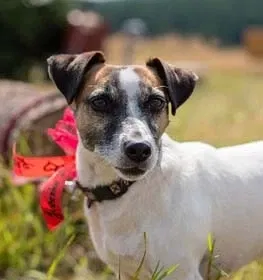
Jack Russell Terrier

Chinese Crested

Giant Schnauzer

Coton de Tulear

Staffordshire Bull Terrier

American Staffordshire Terrier

Basenji

Bouvier des Flandres

Anatolian Shepherd Dog

Keeshond

Pekingese

Nova Scotia Duck Tolling Retriever

Standard Schnauzer

Norwegian Elkhound
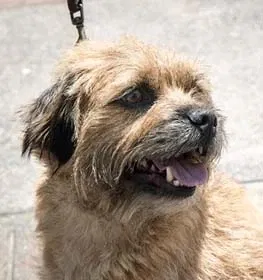
Border Terrier

Afghan Hound

Brussels Griffon

English Setter

Flat-Coated Retriever

Rat Terrier

Boykin Spaniel

Wire Fox Terrier

Leonberger
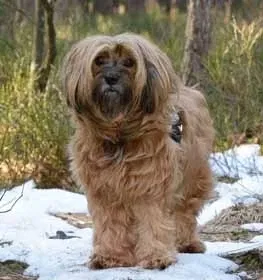
Tibetan Terrier

Borzoi

Belgian Tervuren

Gordon Setter

Norwich Terrier

Silky Terrier
Hypoallergenic Guard Dog Breeds for Allergy Sufferers
Although there are no dogs who are completely hypoallergenic, in its literal terms. There are numerous breeds that are preferable for allergy sufferers. Most pet allergies are caused by dander, which is connected to pet hair, and these dogs have a non-shedding coat that produces much less dander.
Some of the most famous hypoallergenic guard dog breeds are the Bouvier des Flandres, Wire Fox Terrier, and the Giant Schnauzer.
The Bouvier des Flandres is a Belgian farm dog that was developed in the late 1800s as a multi-purpose farm dog. They were bred from Irish wolfhounds, Scottish deerhounds, and local farm dogs, according to some theories, but we cannot be 100% sure. They were utilized as draft animals, protectors, and drovers. The breed is most recognized for being a great cow herder, which is what the French word "bouvier" means. Vuilbaard (dirty beard), koehond (cow dog), and toucheur de boeuf were some of the breed's nicknames (cattle driver).
Bouviers were catching the attention of worldwide dog fanciers far beyond the farms and pastures of Flanders by the turn of the 20th century. A Belgian breed club was created, and a written standard was drafted by French and Belgian experts. However, when World War I broke out, the pastoral Bouvier homeland was transformed into a nightmare battlefield. Farmers in the area were displaced, and their dogs were either lost or destroyed.
The Belgian army was in charge of keeping the breed alive, and Bouviers were known for being brave and resourceful fighting dogs. During peacetime, Bouviers honed their skills as European police K-9s and blind guide dogs.
The Bouvier was nearly extinct again after WWII, but European ex-pats in America kept the species alive. In 1963, the American Bouvier des Flandres Club was founded.
Wire Fox Terriers as we know them now evolved during the peak of British foxhunting in the late 1700s. The terrier's job was to chase the fox out of its den, allowing hounds and horsemen to join the chase across open terrain. To avoid being mistaken for foxes during a hunt, Fox Terrier coats are predominantly white, with no red allowed.
The original Smooth Fox Terriers were possibly a mix of black and tan terriers with smooth coats, Bull Terriers, Greyhounds, and Beagles, though breeders didn't keep many records about the breed's development. Colonel Thornton had a portrait painted of his Smooth Fox Terrier, Pitch, in 1790, which provides us an insight into how early dogs looked. They haven't changed much since then. Old Jock, born in 1859 at Grove Kennel in England, and Belgrave Joe were two well-known 19th-century Smooths who contributed to the breed's evolution. Uniform type had been established by the late nineteenth century although AKC did not recognize Wire and Smooth Fox Terriers as distinct breeds until 1985.
The Wire has always been a consistently successful show dog, with a total of 15 Westminster Kennel Club Bests in Show at the time. Matford Vic, bought from a farmer for $10, won Westminster in 1915 and 1916, making him one of the greatest bargains in show-dog history.
Caesar, King Edward VII's pet dog, charmed the British Empire and was one of the many beloved Wires of history. Asta, the comedic Wire who co-starred with William Powell and Myrna Loy in six "Thin Man" movies, helped to promote The Wire's fame in the 1930s and 1940s. The Wire's striking beauty, expressive face, and natural acting skills have made the breed a familiar presence in movies and on television since Asta's time.
The origins of the Giant Schnauzer can be traced back to the normal schnauzer. The schnauzer was named after the German word for muzzle, schnauze, when it was first produced in Germany in the 1800s. The initial breed was a medium-sized dog that excelled at ordinary farm tasks such as guarding animals and hunting small rodents.
However, in the late 1800s, there was a demand for a larger, more powerful working dog. The standard schnauzer was a popular dog in Germany because it has many desirable characteristics. Schnauzers were mixed with large breed dogs like the Great Dane to give size and stamina to the breed. The outcome was a much larger and more powerful dog, which is now known as the enormous schnauzer.
Because the breed was capable of guarding and herding cattle, it became a familiar sight on farms in the Bavarian Alps. These dogs' larger size afforded them a significant edge against huge predators, as well as a more commanding capacity to herd calves and other livestock. These characteristics later led to the usage of this breed by police and military organizations all over Europe.
Giant Schnauzers began to be imported to the United States in the late 1920s and early 1930s, where enthusiasts sought to improve the breed standard and gain club recognition. The current breed standard was approved by the AKC in 1983 and is in general agreement with European breed standards, though there are a few minor deviations to be aware of.